When it comes to 3D printing, what matters is not the brand of the printer, but your understanding of the devices and their functions. There are numerous 3D printers are not equipped with the same capabilities, but they offer you all the benefits that an expensive 3D printer offers. It is not necessary to purchase an expensive device simply because it has a lot of options.
1. What is a 3D Printer and how do you utilize it?
Three-dimensional printers create 3-dimensional objects by layering the material. There are a variety of 3D printers. They come in a variety of sizes. These are desktop 3D printers, which could cost as little as a few hundred dollars. Additionally, there are cheap 3D printers that could be used by hobbyists and small-sized companies. The mid-range 3D Printers have more features that those designed for professionals and 3D printers designed for beginners. 3D printers can be used to create 3-dimensional objects using three-dimensional computer-aided design (CAD) files. A 3D printer creates three-dimensional objects by layering plastic or other materials. Then, it forms into an object. There are two types of 3D printers: FDM and STL printers which use distinct printing techniques to produce 3D objects. The most cost-effective 3D printers are based on Fused Deposition Modeling.
3d printers usually require longer than regular printers , as 3D printing requires a lot of trial and error for making the perfect 3D prints. The way the printer is designed and what type of 3D printer it’s, will determine the speed at which 3D printing is. 3D printers that are equipped with more features typically take longer to print 3D models than printers that do not have many features.
2. Types of 3D printers
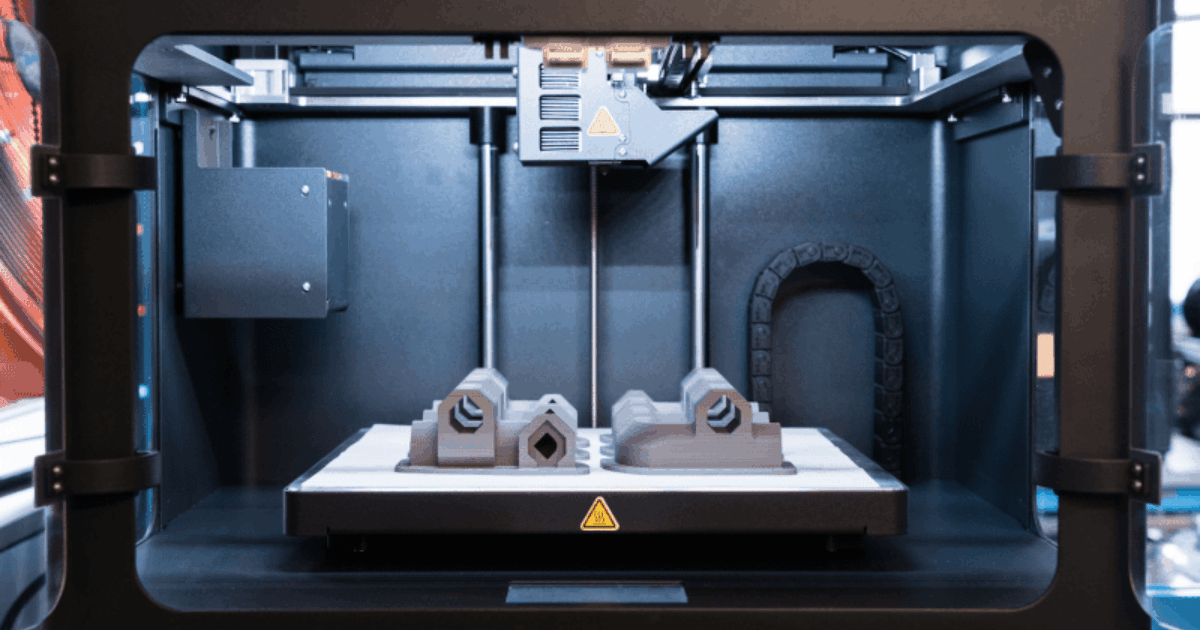
Three-dimensional printers typically fall into one of two categories: 3D Printers or 3D printer filaments. 3D printer filament is the material used in 3D printers for creating 3D prints. 3D printer filaments can be found for both kinds of 3D printers: hot end(FFF) and cold end. Fused Deposition Modeling (FDM) is the most economical method to make 3D prints. 3D printers employ an extruder to melt plastic filament. The tube is then placed into a heated nozzle, where it is then pushed out a small opening. It is then brought into contact with a 3D-printed layer beneath. The result is a 3D object. 3D printers equipped with extruders in the form of Fused Deposition Modeling(FDM) 3D printers are able to print nearly every type of 3D printing materials from HIPS to ABS and from PLA to nylon-based filaments.
3. Material types that can be used for 3-D printing
3D printing uses 3D computer-aided design (CAD) files that make 3D models. The 3D printable models are able to be printed as 3D objects as long as the 3rd dimension has a perpendicular relationship to the 2D plane that is displayed on the screen. The majority of printers utilize three different kinds of 3D printing filaments for printing objects. 3D printing filaments typically are offered in 3 different kinds, ABS(Acrylonitrile butadiene styrene), PLA(polylactic acid) and HIPS(high impact polystyrene).
For more information, click flux beamo
4. Maintenance of 3D printers
Each 3D printer requires regular maintenance to ensure that it prints without issue. Printers using Fused Deposition Modeling(FDM) need regular cleaning of their nozzles to prevent print failures and jams. If there is a print jam make sure that all filament is removed from the printer’s nozzle as well as the extruder.
5. There are a variety of 3D printers can be purchased
3D printers are typically classified into one of two categories: Printer and printer filaments. The filament is the part used by printers to create prints. Printer filaments are offered in both 3 D printers, hot end(FFF) and cold end. To create prints, the Fused Deposition Modeling (FDM) method is employed by the cheapest printers. Fused Deposition Modeling (FDM) printers are able to print all kinds of 3D-based filament including ABS, HIPS to PLA and nylon-based filaments. Printing 3D models can be printed on ceramics, plastics, and metals with FDM printers.